The Caves In Rain And Bad Weather
How rain can affect cave operation, the river, local roads and outdoor walks, and what to check before travelling.
 Written with Hemi Williams, Waitomo cave guide and local specialist, guiding since 2015
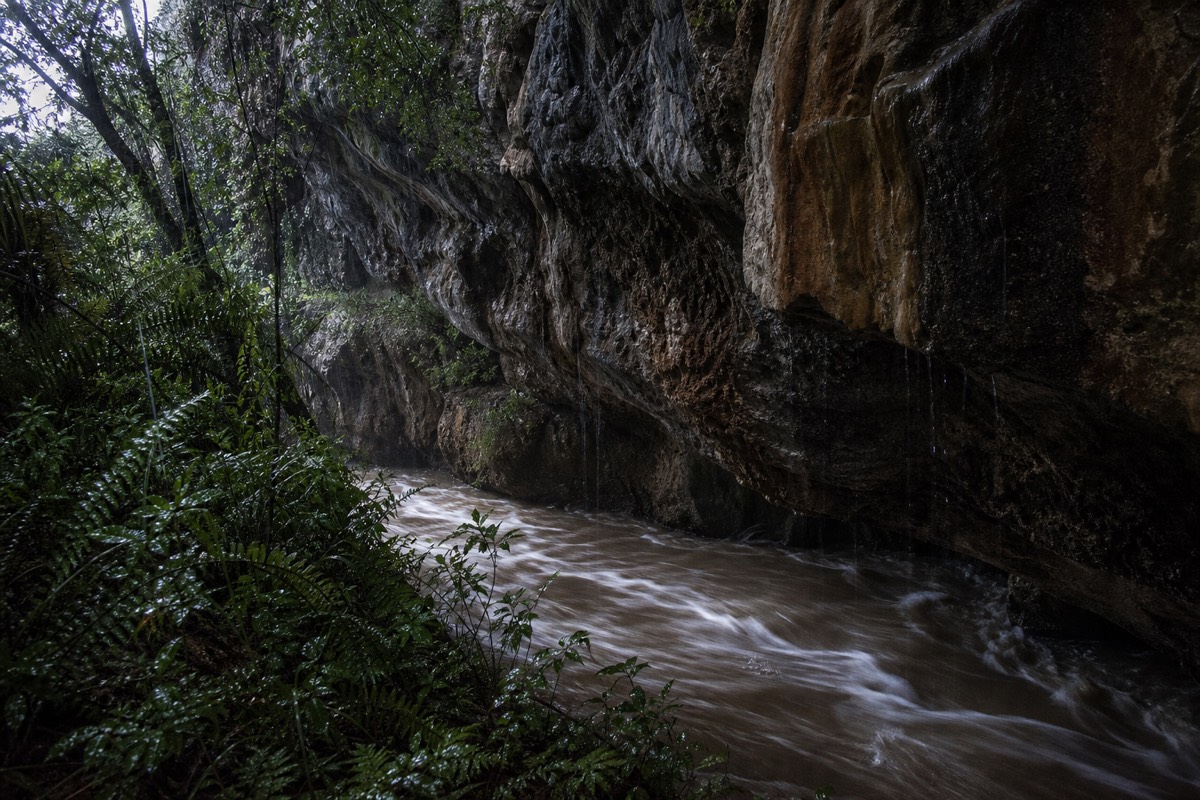
There is a particular kind of holiday morning where you look at the forecast, see solid rain until Thursday, and start rewriting the day. A cave visit can still fit that morning, but being underground does not make the river or the tour independent of the weather.
Does The Waitomo Cave Tour Run In The Rain?
The cave can be visited in ordinary rain, but the boat tour is weather-dependent. The operator publishes daily opening hours of 9am–5pm; check the booking calendar for actual departures and the operator for weather-related changes. Bring a warm layer for the cool cave.
That makes it one option for a wet Waikato day, subject to operating conditions. Arachnocampa luminosa can be seen year-round; that does not guarantee an identical display on every visit.
| Weather | The cave tour | The drive | The free walks |
|---|---|---|---|
| Dry | Unchanged | Easy | Good |
| Light rain | Check booked departure | Allow for conditions | Paths may be wet |
| Heavy rain | May affect operation; check operator updates | Slower, wet rural roads | Check access; tracks may flood |
| Winter cold | Warm layer recommended | Short daylight | Check track conditions |
What Does Heavy Rain Actually Affect?
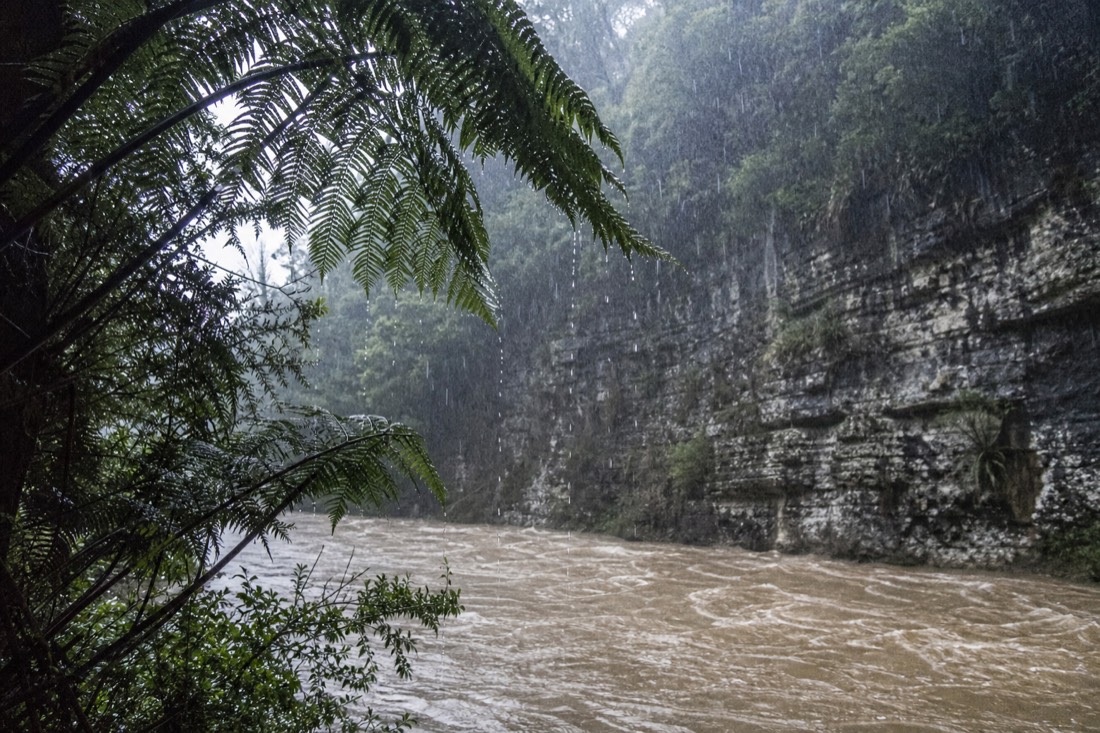
The river, the roads, and how long the drive takes. The Waitomo River runs through the cave and carries the boat on the Grotto section. Sustained heavy rain raises its level, and prolonged wet weather can affect roads and walkways in the district.
River and access conditions can change tour operation. Follow the operator’s updates when weather could affect your visit. What happens when the river rises covers the mechanics of a cave with a river running through it.
The more mundane effect is on your driving day. Two and a half hours from Auckland becomes closer to three in heavy rain, and the last stretch into the village is narrow rural road. In winter, add short daylight to that: a 3pm cave slot in July means a dark drive home. The Auckland driving guide covers the route.
What Gets Better In The Rain?
The waterfalls, and the whole limestone landscape west of the village. Marokopa Falls drops 35 metres and is at its most impressive with water behind it. The Mangapōhue Natural Bridge, a 17-metre limestone arch on an easy 800-metre return walk, sits in a gully that is greener and louder when it is wet.
This is the genuinely useful thing about a rainy Waitomo day. Most destinations have a wet-weather plan that amounts to a museum. Here, a cave visit may fit a wet day, while rainfall can increase waterfall flow and also make outdoor access more difficult. What else there is around Waitomo has the distances and the walk times.

It is worth separating the two things a bad forecast could actually change.
| Concern | Real? | What to do |
|---|---|---|
| The tour may change or be cancelled | Possible | Follow operator updates |
| The drive will be slower | Yes | Leave more time, especially in winter dark |
| The river will be high | In sustained heavy rain | Check the operator's updates |
| The display will look identical | Not guaranteed | Expect natural variation |
Does The Weather Affect The Glowworms?
Glowworms can be seen year-round, but natural conditions and brightness vary. A cave buffers the colony from conditions outside; it does not make the colony or river completely isolated from the environment.
What does affect the display, in a small way, is feeding. The larvae eat flying insects that hatch from the stream below them, and a hungrier larva glows more brightly because the light is bait. Hunger is one influence on light output; it does not establish that weather or season has no effect on the colony. The full biology explains how the fishing lines work.
The cave also monitors its environment. How the cave air is managed describes the monitoring system; the available evidence does not establish whether air-quality or weather interruptions are more frequent.
Should You Rebook If The Forecast Is Bad?
Check your booking and the operator’s advice before changing plans. The featured listing advertises free cancellation up to 24 hours in advance; check your selected option and exact deadline. Cancellation terms depend on the option and deadline; a paid booking is not cost-free merely because the forecast changes.
A wet forecast is a reason to check your plans, not evidence that a particular departure will sell out. Use the calendar for date options and the operator for operating updates.
The booking and cancellation terms are set out in full separately.
| If your forecast is | Do this |
|---|---|
| Rain all day | Check cave operation and outdoor access |
| Heavy rain warnings | Check operator and travel updates before setting off |
| Cold and clear | Bring a warm layer and assess road conditions |
| Uncertain | Check the chosen option’s cancellation deadline |
Which Waitomo Activities Does Weather Actually Affect?
Outdoor activities, access roads and underground river activities can all be affected. Sorted by exposure, the district's activities split cleanly.
| Activity | Weather-affected? |
|---|---|
| Glowworm Caves tour | Weather-dependent; follow operator advice |
| Ruakuri and Aranui | Underground walks; access and operation still matter |
| Small-group private cave tours | Depends on route, river and access conditions |
| Black water rafting | Cold water either way; sustained heavy rain can affect river levels |
| The road west and the free walks | Yes; wet surfaces and flooding can affect access |
| The drive from Auckland | Yes, add time in heavy rain and winter dark |
A cave booking does not remove the need to consider a bad forecast. Rain can make waterfalls more dramatic while making roads and tracks less suitable.
What Is The Wet-weather Version Of A Full Day?
Almost identical to the dry-weather version, with the order swapped. Do the outdoor stops when the rain eases rather than trying to schedule around it, because a cave walk can fit around outdoor plans, subject to operating conditions.
| Time | Wet-day plan |
|---|---|
| Morning | Glowworm Caves tour, if operating; allow check-in time |
| Late morning | Ruakuri Cave, another 90 minutes underground and dry |
| Lunch | Te Kuiti or Otorohanga rather than the village |
| Afternoon | Marokopa Falls, which is at its best with water behind it |
| Late afternoon | Mangapōhue Natural Bridge, greener and louder in the wet |
Check both the tour’s operating advice and your driving conditions. The last stretch into the village is narrow rural road, and heavy rain plus winter daylight turns a 2 h 30 run from Auckland into something closer to three hours in the dark on the way home.
When Should You Actually Change Plans?
Change plans when operator advice, road conditions or weather warnings require it. Ordinary rain need not prevent a visit, but follow the operator’s current advice.
| Forecast | Action |
|---|---|
| Rain | Check your booking; take an umbrella for the car park |
| Heavy rain | Check operator updates and allow more driving time |
| Severe weather warning | Check the operator's own updates before setting off |
| Flooding on the route | Check road conditions and operator advice; avoid flooded routes |
| Cold snap | Nothing changes at 16 °C underground |
Environmental monitoring is another part of cave management. It does not establish that rain-related interruptions are less likely.
What Is The Wet-day Booking Pattern?
A forecast does not tell you how many places remain. Check your date rather than assuming wet days or weekends will have a particular level of demand.
| Forecast, two days out | What happens to availability |
|---|---|
| Fine | Check the selected date |
| Rain | Check dates and operating updates |
| Heavy rain in a holiday period | Check operation before travel |
| Fine, but a peak weekend | Check actual departures |
Whether to book depends on your plans and the selected option’s cancellation terms. Check available dates and the cancellation deadline, while leaving room to follow weather and operator advice.
Does Bad Weather Change The Cave At All?
The river and cave access can be affected. The Waitomo River flows through the lower level and carries the boat, so prolonged rainfall raises the water. The booking listing states that the experience is weather-dependent; follow the operator’s assessment.
| Element | Affected by rain? |
|---|---|
| Cave temperature | No, a constant 16 °C |
| Glowworm display | Natural variation; identical brightness not guaranteed |
| Air quality management | Monitored as part of cave management |
| River level in the lower cave | Yes, in sustained heavy rain |
| Access roads and walkways in the district | Yes, in severe weather |
| The tour schedule | Subject to operating conditions |
If a severe weather warning is in force for the Waikato, the operator's own updates are the source to check before driving. Check current operating information when planning travel.
Do the Waitomo caves close in bad weather?
The boat tour is weather-dependent. River levels and access roads can be affected, so follow the operator’s current advice and check travel conditions before setting off.
Is a rainy day a good day to visit?
A cave visit can fit a rainy day if it is operating. Outdoor walks may be wet or inaccessible; stronger waterfall flow is not a guarantee of safe access.
Does rain affect the glowworms?
Glowworms can be seen year-round, but the cave is a natural environment and display brightness can vary. A wet forecast does not establish what the display will look like.
What about winter?
Winter in the Waikato is wet rather than icy, and the cave sits at 16 °C whatever the month. The real winter considerations are short daylight for the drive home and quieter tours, since May to September is the low season for visitor numbers.
Can a tour be cancelled for other reasons?
Yes. Operational or environmental conditions can affect a tour. Check the operator’s advice and your booking terms; environmental monitoring is part of cave management.
Choose Your Cave Date
Have your cave experience in mind? Check your travel date before arranging the rest of your Waitomo day.
45-minute guided walk and boat ride; allow extra time for check-in. English. Stairs, no wheelchair access and no photography. Meet at Waitomo; transport is not included.
Choose Your Cave
Would you prefer the classic boat grotto or a dry walking cave without a boat?
Tour duration excludes your travel and check-in. These are planning suggestions; confirm suitability and your chosen date with the provider.
- Glowworm Cave Walk And Boat
- 45-minute guided walk and boat ride; allow extra time for check-in. English. Stairs, no wheelchair access and no photography. Meet at Waitomo; transport is not included.
- Ruakuri Guided Cave Walk
- 90-minute guided walk; allow two hours on site. English, glowworms on foot and photography permitted in designated areas, without tripods or extension sticks. Wheelchair/stroller access up to 65 cm wide; confirm individual needs. Own transport to Ruakuri.