What 45 Minutes Underground Is Really Like
A section-by-section account of the Waitomo cave tour, built from the operator's route and hundreds of traveller reports, including where the time actually goes.
 Written with Hemi Williams, Waitomo cave guide and local specialist, guiding since 2015
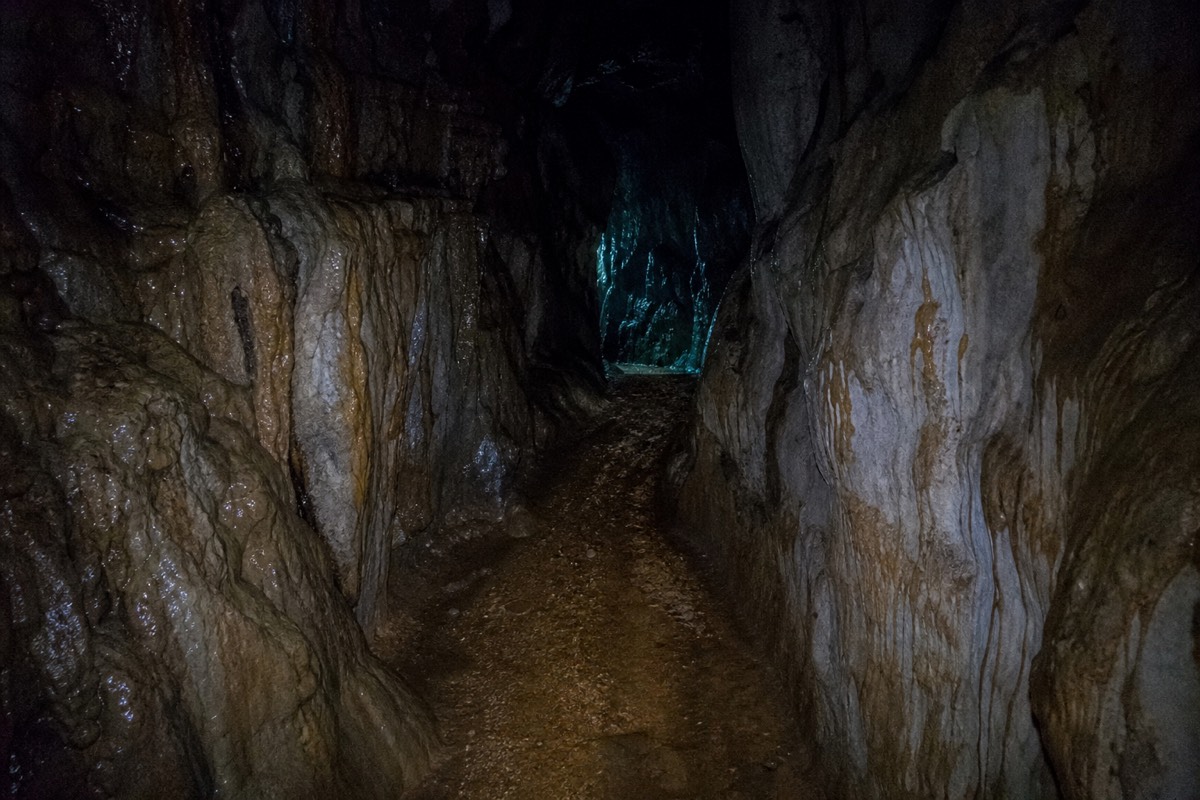
The clock starts at the cave entrance, not at the ticket desk, and it runs for forty-five minutes. Almost everything written about this tour argues about whether that is long enough. Very little of it explains where the time actually goes, which is the more useful question, because the answer changes what you should expect from each part of it.
Where Do The 45 Minutes Actually Go?
Roughly three quarters on foot in the dry upper level, and the last quarter on the water. Travellers consistently describe the boat section through the Glowworm Grotto as five to ten minutes of the tour, with the walk through the Catacombs, the Pipe Organ, the Banquet Chamber and the Cathedral taking the rest.
That ratio is the single most important thing to know before booking, and the operator does not publish a figure for the boat section. What exists is a large and consistent body of traveller reporting across GetYourGuide, Viator, Tripadvisor and Reddit that puts it in that range. Treat it as reported, not official, and plan around it anyway.
| Section | Roughly | What happens |
|---|---|---|
| Entrance and descent | 5 minutes | Into the dry upper level, formed paths and stairs |
| The Catacombs and the Pipe Organ | 10 to 15 minutes | Formations, and the guide's commentary |
| The Banquet Chamber | 5 minutes | Where the earliest visitors ate |
| The Cathedral | 5 to 10 minutes | The tall domed chamber, sometimes with singing |
| Down to the landing | 5 minutes | The path drops to the underground river |
| The Glowworm Grotto | 5 to 10 minutes | The boat, in silence, under the colony |
What Is The Walking Section Actually Like?
Better than its reputation, and it is the part reviewers underrate before they arrive and praise afterwards. The upper level is dry, lit at low level, and threaded with formed paths and handrails. There are stairs throughout, which is why the cave is not wheelchair or pushchair accessible.
The formations have names that predate the tourism: the Catacombs, the Pipe Organ where a fluted stone curtain hangs like organ pipes, the Banquet Chamber where nineteenth-century visitors sat down to eat underground. The operator's own description of the cave sets out the route.
Then there is the Cathedral, which is the surprise. It is a tall domed chamber with acoustics good enough that guides sometimes sing in it, and the reviews are full of people who did not expect that to be the moment they remembered. One wrote that her guide "sang a beautiful Maori song in the caves cathedral, its was so moving". Another said the same thing about a different guide on a different day. More on that chamber if it is the part that appeals.
What Happens On The Boat?
The lights go out, the guide asks for silence, and the boat is pulled through the dark by hand along overhead ropes. No engine, no commentary, no torch. The only light is the ceiling.
The silence is not theatre. Noise and vibration make glowworm larvae dim defensively, and light competes directly with the glow they use to bait their silk fishing lines. The same logic drives the total ban on cameras inside this cave, which Ruakuri and Aranui do not share.
What people describe afterwards is remarkably consistent. One reviewer wrote that "drifting silently beneath thousands of tiny glowing lights felt like looking up at a sky full of stars underground" and that it "genuinely brought tears to my eyes". Another said simply that it was "amazing how he sailed us through in the dark". The complaint attached to almost every one of those descriptions is that it ended too soon.

What Surprises People?
Three things, in order: the photography ban, the length of the boat section, and how much of the tour is a lecture. All three are avoidable surprises, which is why they show up in four-star reviews rather than one-star ones.
One Viator reviewer put the third one honestly: "I should've known the time would be used to teach people about the caves but it was really funny and fun to learn about." He still gave it four stars and called it great for a family. That is the shape of most of the criticism here: not that the tour is bad, but that it was not the tour they had pictured.
| Expectation | Reality |
|---|---|
| Mostly glowworms | Mostly a guided walk, with glowworms at the end |
| You can photograph it | Nothing that takes a picture goes past the entrance |
| A quiet, private cave | Up to 23 per boat; departures vary by date |
| A long boat ride | Five to ten minutes, traveller-reported |
| A cold cave | 16 °C, cool rather than cold, all year |
If any of those would ruin it for you, the fix is to book a different cave rather than a different day. Ruakuri runs 90 minutes with photography allowed, and Spellbound caps groups at twelve.
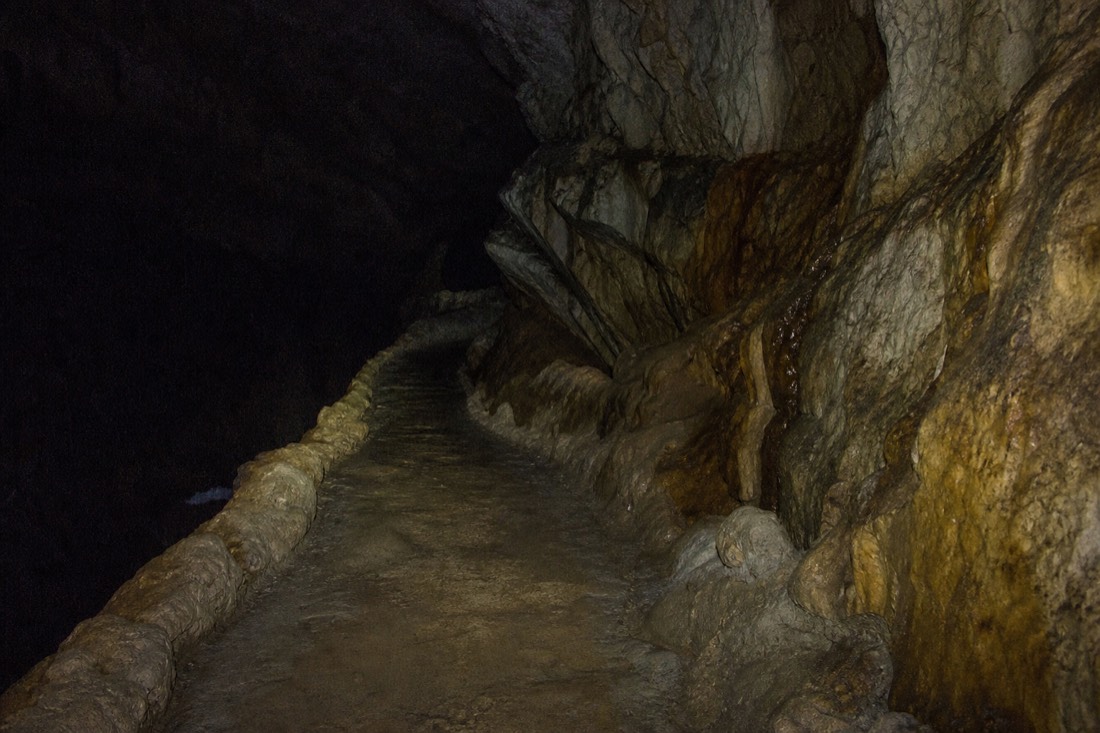
The three sections of the tour ask for quite different things from a visitor.
| Section | What you do | What is asked of you |
|---|---|---|
| Dry upper level | Walk, listen, look at formations | Manage stairs, keep up with the group |
| The Cathedral | Stand still in a domed chamber | Quiet, so the acoustics work |
| The Grotto | Sit in a boat in the dark | Total silence, no light, no camera |
Is It Enough Time?
For what it is, yes. For what people imagine it is, no. The tour is a well-run cave walk with a spectacular short finale, and the visitors who come out delighted are the ones who understood that going in. The ones who wanted half an hour under the ceiling should have booked Spellbound, whose boat section is reported at around twenty minutes.
There is also a good argument that the brevity is the point for some visitors. Forty-five minutes with a payoff at the end is close to the ideal format for children, which is exactly why the complaint adults make is the reason families rate it so highly.
If you want to read the criticisms in full first, the round-up of what travellers complain about has them with the review text attached.
How Does It Compare With The Longer Tours In The District?
The 45 minutes is dense and the longer tours are spacious, and people confuse density with value in both directions. Laid side by side, the difference is not quality, it is pacing.
| Glowworm Caves, 45 min | Ruakuri, 1 h 30 | Eco cave tour, 3.5 h | |
|---|---|---|---|
| Rating and reviews | 4.5, 5,652 | Sold by the same operator | 5.0, 297 on the eco cave tour |
| Glowworm experience | Short boat finale, traveller-reported | Viewed on foot | Part of a wild-cave route |
| Photography | Prohibited | Permitted, no flash | Phones/small cameras; no tripods |
| Group format | Scheduled shared departures | Guided walking group | Small-group wild-cave tour |
| The Grotto | Yes, only here | No | No |
The 45-minute format exists because it fits a driving day, and that is a real constraint rather than a compromise. It is also why it collects more mixed reviews than the products with an hour of slack in them.
What Do People Do Differently On A Second Visit?
Book earlier in the day and add a second cave, in that order. The pattern across return visitors is consistent enough to be worth borrowing before your first visit rather than after it.
| First visit | Second visit |
|---|---|
| Midday slot, whatever was available | An early departure offered on the chosen date |
| The Glowworm Cave alone | The Grotto plus Ruakuri or a small-group cave |
| Surprised by the camera rule | Camera left in the car deliberately |
| Bought the souvenir photo | Did not |
| Drove straight back afterwards | Stayed for the free bush walk after dark |
An early departure may improve the atmosphere without adding a second cave. Compare the offered times and prices before deciding which fits your day.
How long is the boat ride at Waitomo?
Travellers consistently report five to ten minutes of the 45-minute tour. The operator does not publish a figure for the boat section. The rest of the tour is a guided walk through the dry upper level of the cave.
What do you see on the walking section?
The Catacombs, the Pipe Organ where a fluted stone curtain hangs like organ pipes, the Banquet Chamber where nineteenth-century visitors ate underground, and the Cathedral, a tall domed chamber with acoustics guides sometimes sing in.
Why do you have to be silent on the boat?
Noise and vibration make glowworm larvae dim defensively, and their light is bait for the silk fishing lines they hang below themselves. The same reasoning drives the total camera ban in this cave, which Ruakuri and Aranui do not share.
Is the tour rushed?
It is scheduled rather than rushed. Tours use scheduled departures, and the operator publishes a boat capacity of up to 23 people. Ruakuri offers a longer, 90-minute walking format, rather than the short boat finale.
How much time should you allow on site?
Allow about 90 minutes on site for the 45-minute tour, including the required check-in 30 minutes before departure and time to return through the visitor centre. The boat section depends on river conditions.
Choose Your Cave Date
Have a travel date in mind? Check Glowworm Cave Walk And Boat before arranging the rest of your day.
45-minute guided walk and boat ride; allow extra time for check-in. English. Stairs, no wheelchair access and no photography. Meet at Waitomo; transport is not included.
Choose Your Cave
Do you want the short boat finale, a longer walking tour or a wild-cave outing?
Tour duration excludes your travel and check-in. These are planning suggestions; confirm suitability and your chosen date with the provider.
- Glowworm Cave Walk And Boat
- 45-minute guided walk and boat ride; allow extra time for check-in. English. Stairs, no wheelchair access and no photography. Meet at Waitomo; transport is not included.
- Ruakuri Guided Cave Walk
- 90-minute guided walk; allow two hours on site. English, glowworms on foot and photography permitted in designated areas, without tripods or extension sticks. Wheelchair/stroller access up to 65 cm wide; confirm individual needs. Own transport to Ruakuri.
- Off The Beaten Track Cave Tour
- Around 3.5 hours exploring a wild cave with a guide. Phones and small cameras allowed, no professional cameras or tripods. Uneven terrain; unsuitable for mobility, back or heart problems. Meet the operator locally. Minimum age 12, maximum weight 120 kg and moderate fitness required.